101 Smith Drive, Suite 2, Cranberry Township, PA 16066



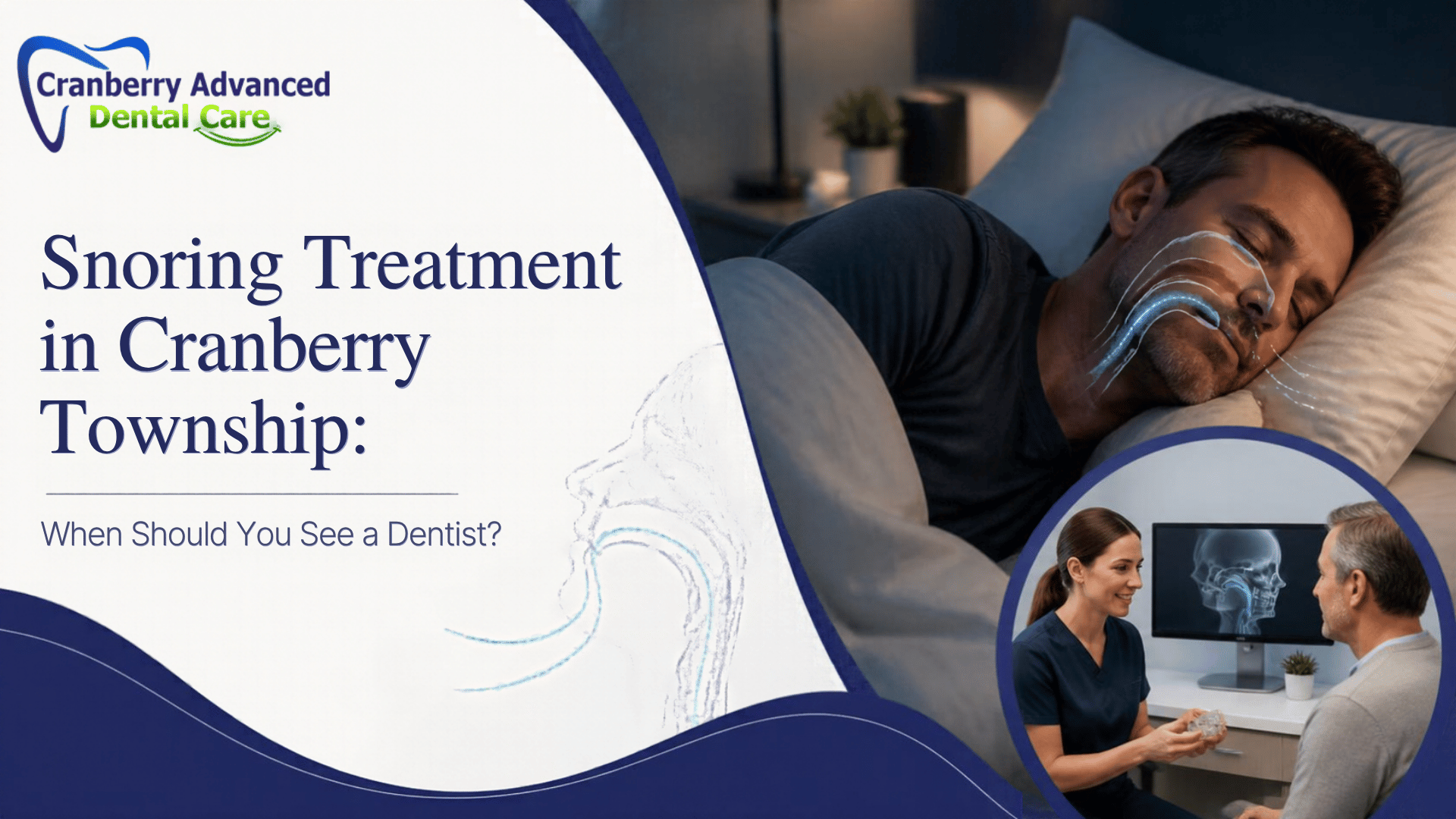
Snoring Treatment in Cranberry Township: When Should You See a Dentist?
Snoring can seem like a small problem at first. Perhaps your partner nudges you during the night, you wake up feeling less rested than expected, or someone in your household struggles to sleep because of the noise. Over time, however, persistent snoring can affect sleep quality, relationships, and daily comfort.
While occasional snoring is common, frequent or loud snoring deserves attention, especially when it occurs alongside other symptoms.
The good news is that certain types of snoring may be addressed with dental care. At Cranberry Advanced Dental Care in Cranberry Township, PA, patients can explore Solea® Sleep laser therapy, a non-surgical treatment designed to reduce snoring in appropriately selected patients.
But how does this treatment work, and when should you see a dentist rather than a medical provider? Understanding the difference can help you take the right next step toward better sleep.
What Causes Snoring?
Snoring occurs when airflow becomes partially obstructed during sleep, causing soft tissues in the upper airway to vibrate. The sound can range from a quiet rumble to loud, disruptive noise.
Several factors may contribute to snoring, including:
- Relaxed throat tissues: During sleep, muscles in the throat relax. This can allow surrounding tissues to vibrate as air passes through.
- Sleeping position: Sleeping on your back may make snoring more noticeable for some people.
- Nasal congestion: Allergies, colds, or other causes of nasal blockage can make breathing through the nose more difficult.
- Airway anatomy: The structure of the mouth, throat, and upper airway can influence airflow during sleep.
- Alcohol and certain medications: Some substances can increase muscle relaxation and contribute to snoring.
- Excess body weight: For some individuals, additional tissue around the upper airway can contribute to narrowing.
Not all snoring has the same cause. That is why an appropriate evaluation is important before choosing a treatment.
Can a Dentist Help With Snoring?
Yes. Dentists can assess certain oral and anatomical factors associated with snoring and may offer treatment options when appropriate.
The right approach depends on what is causing the snoring and whether there are signs of an underlying sleep-related breathing disorder.
Depending on the patient’s needs, dental approaches may include oral appliances designed to help maintain airflow by repositioning the jaw or tongue, or selected treatments that address soft tissues associated with snoring.
At Cranberry Advanced Dental Care, Solea® Sleep laser therapy is offered as a non-surgical option designed to reduce snoring.
However, it is important to distinguish ordinary snoring from possible obstructive sleep apnea. A dental snoring consultation does not replace medical evaluation or sleep testing when sleep apnea is suspected.
What Is Solea® Sleep Laser Therapy?
Solea® Sleep is a laser-based treatment offered at Cranberry Advanced Dental Care for selected patients who want to address snoring without traditional surgery.
The treatment is designed to address soft tissues associated with snoring, particularly the soft palate, which is the flexible tissue toward the back of the roof of the mouth.
According to CADC’s treatment information, Solea® Sleep uses laser energy intended to gently tighten and stiffen collagen within the soft palate. The goal is to reduce the vibration of relaxed tissue during sleep, which may help decrease the sound and intensity of snoring in suitable patients.
What Are the Potential Benefits of Solea® Sleep?
For appropriately selected patients, Solea® Sleep may offer several potential advantages:
- A non-surgical approach: The treatment is designed to address snoring without traditional surgery.
- A treatment focused on soft tissue: It targets tissue associated with the vibrations that produce snoring.
- A potentially convenient option: CADC describes the treatment as involving minimal disruption to normal activities.
- A personalized treatment plan: A consultation can help determine whether this approach is suitable for the patient’s snoring concerns.
Results can vary, and Solea® Sleep is not appropriate for every cause of snoring. A consultation is needed to discuss suitability, expected outcomes, the number of treatments that may be recommended, and any limitations.
Most importantly, Solea® Sleep should not be presented as a treatment for obstructive sleep apnea unless a qualified medical provider has established an appropriate diagnosis and management plan. It is a snoring treatment option, not a substitute for sleep apnea care.
How Is Ordinary Snoring Different From Obstructive Sleep Apnea?
This is one of the most important distinctions to understand when exploring snoring treatment.
Ordinary snoring can occur when relaxed tissues vibrate during sleep. Obstructive sleep apnea, or OSA, is a medical condition in which breathing repeatedly becomes reduced or stops temporarily because the upper airway becomes obstructed during sleep.
Snoring alone does not confirm that someone has sleep apnea. However, certain accompanying symptoms can indicate that medical evaluation is needed.
| Sign or symptom | What it may indicate |
|---|---|
| Occasional snoring without other symptoms | May be related to sleep position, congestion, or other factors |
| Frequent, loud snoring | May warrant further assessment, particularly if persistent |
| Witnessed pauses in breathing | A warning sign of possible obstructive sleep apnea |
| Gasping, choking, or snorting during sleep | Can indicate interrupted breathing |
| Excessive daytime sleepiness | May be associated with poor sleep or an underlying sleep disorder |
| Morning headaches or unrefreshing sleep | Can have several causes, including possible sleep-disordered breathing |
These symptoms are not enough to diagnose sleep apnea on their own. Diagnosis requires an appropriate medical assessment and, when indicated, a sleep study.
The American Academy of Sleep Medicine emphasizes that medical providers are responsible for diagnosing conditions such as obstructive sleep apnea. If you or your partner notices breathing pauses, gasping, choking, or significant daytime sleepiness, speak with a physician or qualified sleep medicine provider about evaluation.
Do not delay medical evaluation for possible sleep apnea while pursuing a cosmetic or non-surgical snoring treatment.
When Should You See a Dentist About Snoring?
Consider scheduling a dental consultation if snoring is persistent, disrupts your household’s sleep, or affects your quality of life and you want to understand your options.
A dentist may be able to assess relevant oral structures, discuss potential treatment approaches, and help determine whether a dental intervention may be appropriate.
A dental consultation can be particularly useful if:
- Your snoring occurs regularly and affects your partner’s sleep.
- You want to learn about non-surgical options for selected types of snoring.
- You have questions about laser-based snoring treatment.
- You would like to understand whether your oral anatomy may be contributing to the problem.
However, if your snoring is loud and accompanied by witnessed breathing pauses, gasping, choking, or excessive daytime sleepiness, seek medical evaluation for possible sleep apnea. A dentist can be part of a coordinated care approach, but should not be the only point of evaluation when these warning signs are present.
What Should You Expect During a Solea® Sleep Consultation?
Your first step is to discuss your symptoms and determine whether Solea® Sleep may be appropriate for your situation.
At Cranberry Advanced Dental Care, a consultation can help you understand the treatment approach and the factors that influence suitability.
You may want to discuss:
- How frequently you snore and whether it affects your partner.
- Whether you experience daytime fatigue or unrefreshing sleep.
- Whether anyone has observed pauses in your breathing.
- Whether you have already been evaluated for sleep apnea.
- What Solea® Sleep involves and what results may reasonably be expected.
Be open about any symptoms you have noticed. If there are signs of possible sleep apnea, appropriate medical evaluation should take priority.
The goal is not simply to make snoring quieter. It is to identify an appropriate path forward while taking your overall sleep health seriously.
Explore Snoring Treatment in Cranberry Township, PA
Persistent snoring can affect more than the person making the noise. It can interrupt a partner’s rest, create frustration at bedtime, and leave both people feeling tired the following day.
For selected patients, Solea® Sleep laser therapy may be an option worth exploring. The best next step is to understand what may be causing your snoring and whether this treatment is appropriate for you.
At Cranberry Advanced Dental Care, our team can discuss Solea® Sleep and help you understand your options for addressing snoring.
Interested in learning whether Solea® Sleep may be right for you?
Call 724-776-4250 to schedule a consultation.
Cranberry Advanced Dental Care
101 Smith Drive, Suite 2
Cranberry Township, PA 16066
Website: www.cranberryadvanceddental.com
Learn more about our snoring treatment with Solea® Sleep.
Frequently Asked Questions About Snoring Treatment
Can a dentist treat snoring?
Yes. Dentists can assess certain oral factors associated with snoring and may offer suitable treatments, depending on the cause. CADC offers Solea® Sleep laser therapy for selected patients. Snoring accompanied by symptoms of possible sleep apnea requires medical evaluation.
What is Solea® Sleep laser therapy?
Solea® Sleep is a laser-based treatment offered by CADC that is designed to reduce snoring by addressing soft tissues associated with snoring, particularly the soft palate. Suitability and expected results depend on the individual.
Is Solea® Sleep a surgical treatment?
CADC describes Solea® Sleep as a non-surgical snoring treatment. During a consultation, ask about the procedure, expected treatment course, potential risks, and whether it is appropriate for your circumstances.
Does Solea® Sleep treat sleep apnea?
Solea® Sleep should not be assumed to treat obstructive sleep apnea. Sleep apnea requires medical evaluation and an appropriate diagnosis and treatment plan. If you experience breathing pauses, gasping, choking, or excessive daytime sleepiness, consult a qualified medical provider.
How do I know whether my snoring is a sign of sleep apnea?
Snoring alone does not establish a diagnosis. Loud habitual snoring combined with witnessed pauses in breathing, gasping or choking during sleep, or significant daytime sleepiness should prompt medical evaluation. A qualified provider can determine whether sleep testing is needed.
Who is a good candidate for Solea® Sleep?
Suitability depends on the cause and characteristics of your snoring and whether an underlying sleep disorder is present. CADC can discuss the treatment with you and help determine whether further evaluation is needed before proceeding.
How can I schedule a snoring consultation in Cranberry Township?
Contact Cranberry Advanced Dental Care at 724-776-4250 or visit cranberryadvanceddental.com to inquire about Solea® Sleep and available consultation options.
Medical note: This article is for educational purposes and does not diagnose or treat sleep disorders. Persistent snoring, especially when accompanied by breathing pauses, gasping, choking, or daytime sleepiness, warrants appropriate medical evaluation.